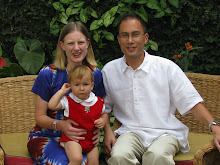
Exactly twenty years ago from this Monday, on my 16th birthday, I set foot in Africa for the first time. I arrived in Harare after two long plane rides from Seattle, set to spend the rest of 1989 as a Rotary International exchange student. One could say it’s ironic that I’m living in Africa again two decades later, but I say it’s exactly because I went to Zimbabwe and lived there during my formative teenage years that I returned to live here as an adult.
Unlike most American teenagers, I did not get my driver’s license on that day of my 16th birthday, but I did get official permission that I was old enough to travel alone to the other side of the world, to a continent that none of my family had been to before, and to explore the world on my own. I began my own Odyssey that day, and it has continued for two decades.
I was a modern-day explorer of Southern Africa and saw much of the country and the region, including parts of Malawi, South Africa and Botswana. I visited Victoria Falls and saw South Africa under apartheid, while Nelson Mandela was still in prison. I flew in a glider and took part in sailboat races. I also saw my first part of Europe on my way home. With a Kenyan from Mombasa, who had never set foot off his continent, we left Heathrow Airport on our layover and took the Tube into central London and saw Buckingham Palace. That was it. I was hooked on travel. I had started to see the world’s famous and exotic places.
Those were the good years in Zimbabwe. It was only nine years after it had gained independence. The memories of the revolution were still fresh in its citizens’ minds, but there was hope and optimism that it was a new country, and everyone - black and white, British citizens, former loyalists, freedom fighters, Mugabe loyalists (imagine!) - was willing to build a new, prosperous nation together. And it was an interesting point in Kenya’s history to be here in the past year, when it toyed with a civil war, when it threatened to break apart internally along tribal lines. Ironically Kenya’s recent conflict was triggered by a president – a presidential election – while Zimbabwe’s current woes 20 years later can be blamed on the same thing. I have one story from my time in Zimbabwe of living 11 months there under prosperity, and I have one (near) war story from my time in Kenya. At least I gained that while in Africa this time. So many of the expatriate friends we know have many literal war stories from living in places like Cambodia and Liberia. It’s the war stories that give life stories the real substance and texture.
So today, 20 years later, I sit poised to return to the U.S. from Africa, satisfied that I came back to live here, satisfied with a little over a year spent in Africa again. I’m obviously at a different point in my life now, with a wife and daughter, and she will have spent her first year or so of life here, although she won’t remember any of it. But when she gets older, together we can talk about our times in Africa. I will have to talk for her and fill in her memories for her of this place. I hope she, too, feels that Africa holds a special place in her heart. And I hope that she, too, will hold those memories dear enough that they will compel her to return and perhaps live somewhere here again for a year…or two…or more. Or at least that she knows she has permission – and encouragement - to be a 21st century explorer of the entire world and that it is traveling and visiting and being and living in different places that adds richness to one’s life.
So, I wonder where I’ll be living 20 years from now, on my 56th birthday…?
Saturday, February 7, 2009

Monday, February 2, 2009
Stephen's plans for leaving Kenya and returning to the U.S.
Many of you, our friends and family, have started to notice from what I’ve put on my Facebook profile and what I’ve said in e-mails and on our Africa blog that I’m laying plans for my/our return to the U.S. And some of you have started asking me about it. I’m sorry to do this, that it won’t mean individual replies to many of you who have asked about this, but I’m just going to write a mass reply/note/e-mail telling you what our plans are. This may be more detail than some of you care to read, but I’m trying to cover all bases with this:
I have a one-way ticket out of
Then, on March 12, I will fly from
And no, I will not return to
You might have follow-up/new questions about my plans after reading this, but with just a few weeks before I’m set to leave
Wednesday, January 28, 2009
Welcome to Africa column: How things really operate in Kenya
Here are examples – all things that occurred in just one day (today) – of how things operate in this country:
Is there any wonder that I can’t wait to get out of here?!
- Mid-morning a man from the city water company shows up in the compound, threatening to disconnect the water supply to our house – again. I’ve lost track of how many times this has happened in the 13 months that we’ve lived here. I explain to him, as calmly as I can, trying my hardest to contain my anger, the whole history of trouble we’ve had. Unlike all previous times, I manage to convince him not to shut our water off, but it appears that he is doing it only out of the goodness of his heart and after he calls me “friend” and “brother,” rather that giving me any benefit of the doubt or just believing that my explanations about the cause of the problem might be credible. The story behind this is that the water company believes more than 76,000 Kenyan shillings (close to US$1,000) are owed to it by CARE International, which was one of the previous tenants of our house (or the employer of) – and not even our immediate predecessor. The man who came today said he had been sent to shut off the water for CARE, and I kept telling him that CARE has nothing to do with us or our house anymore. He had a major epiphany that the problem must be between our landlord and CARE, to which I replied, “I’ll say!” This is something that we’ve been trying to convince the water company of countless times. But finally today’s man decided that we, the innocent party, do not deserve to be punished, but only after he asked why I couldn’t produce the latest bill and proof that it had been paid (I refused, countering with a question of my own: Why can’t he remove our house from his list?).
- I call the office of Lexi’s pediatrician to make an appointment for next week. I call the land line and am told by the woman to call back on the cell phone for the office. She proceeds to give me two different numbers. I immediately hang up and dial one of the cell phone numbers and am pretty sure the same woman picks up, but I politely tell her what I need and why all over again. In the same number of words she used to tell me to call a different number, couldn’t we have just scheduled the appointment in my first call to the office?
- I also call our Internet service provider to complain about the slow and dropped connections and manage to get through. I had tried to get through to customer support about three weeks ago, but nobody was ever answering, even after trying at least 10 times over two or three days. Finally a woman answers the phone, and when I ask if anybody works there anymore, she says yes and then tries to transfer me – twice – to a support person. Nobody picks up. Fortunately the woman comes back on and takes my number and promises that someone will call me back as soon as they come back to the office. That was at least two hours ago, and so far nobody has called me back.
- Mid-afternoon I wait for the electrician sent by our landlord to come for his 2:00 appointment. This is his second scheduled visit after he failed to fix the water heater the first time he visited last week. It is now after 5:00, and there is no sign of the electrician, not even a phone call to say why he is late or when he might come later. For his appointment last week, I was told he would come on a certain day, but he showed up the following day instead. When I asked him why he was delayed, he said he had come the original day of the appointment but that “it was a bit late,” so apparently he never got as far as our house. And on top of all this, this was the second electrician who has worked on the same water heater. And that first electrician had to make at least two visits!
- The people at the post office still cannot make change. I bring in two pieces of mail, and the total for the postage is 145 Kenyan shillings. I give the man a 200 shilling note, and he punches into his calculator 200 minus 145. I wanted to shout “55!” at him. I’m baffled at this because they always seem to be able to do some math in adding up two or three stamps per piece of mail to get the proper postage.
Is there any wonder that I can’t wait to get out of here?!
Monday, January 26, 2009
Mama Obama's inauguration hat
Aretha Franklin's inauguration hat has really attracted a lot of attention. The hat itself has inspired its own groups on Facebook. But it's only because she's famous and happened to be the other First Lady on stage, the one of Soul, as they identified her on CNN. And I guess demanding R-E-S-P-E-C-T gets you that kind of attention.
But last week in the Daily Nation, one of our papers in Kenya, I saw identified in a photo on the stage behind Obama his grandmother, Sarah Onyango. Obama calls her "Granny" or "Mama Sarah." She had what would probably appear to be something inappropriate - too casual - for that occasion: a simple head scarf fashioned out of an African print cloth. Maybe too casual compared to Aretha's glitzy hat, which appears to have a personality of its own. But her headdress was so typical of African women, and Mama Sarah was dressing her part like Aretha was, yet nobody noticed her and what she was wearing and what it represented. The accompanying article says of her: She "raised Obama's father during his boyhood in the Kenyan village near Kisumu. Until recently, she lived in a hut with neither running water nor electricity, and chickens darted in and out." (Kisumu is quite far from us in Nairobi; we would have to fly to get there.)
Even today as I write this, Jane, our nanny/house help, has on exactly this type of head wrap.

So hats off to Kenyan women like Mama Sarah and the headdresses they wear, not just at their grandson's inaugurations, but every day! They're not famous singers or rich or wealthy people, but they're often just the poor, simple women who raise the children of Africa in tough conditions. They are the child-care providers, the cooks of the ugali and sadza, the tillers of the soil who grow the maize and then grind it. These are the hats that soak up the sweat from heavy toil or walking for miles in the hot African sun to fetch the family's daily supply of water. These are the hats that are often used to wipe the tears as they mourn the husbands and fathers and sons who die of AIDS. We didn't crown a king last week, but surely his grandmother deserves to be treated like a queen. Mama Sarah's hat was an acknowledgment and celebration of our new president's humble but worthy roots in Africa.
But last week in the Daily Nation, one of our papers in Kenya, I saw identified in a photo on the stage behind Obama his grandmother, Sarah Onyango. Obama calls her "Granny" or "Mama Sarah." She had what would probably appear to be something inappropriate - too casual - for that occasion: a simple head scarf fashioned out of an African print cloth. Maybe too casual compared to Aretha's glitzy hat, which appears to have a personality of its own. But her headdress was so typical of African women, and Mama Sarah was dressing her part like Aretha was, yet nobody noticed her and what she was wearing and what it represented. The accompanying article says of her: She "raised Obama's father during his boyhood in the Kenyan village near Kisumu. Until recently, she lived in a hut with neither running water nor electricity, and chickens darted in and out." (Kisumu is quite far from us in Nairobi; we would have to fly to get there.)
Even today as I write this, Jane, our nanny/house help, has on exactly this type of head wrap.

So hats off to Kenyan women like Mama Sarah and the headdresses they wear, not just at their grandson's inaugurations, but every day! They're not famous singers or rich or wealthy people, but they're often just the poor, simple women who raise the children of Africa in tough conditions. They are the child-care providers, the cooks of the ugali and sadza, the tillers of the soil who grow the maize and then grind it. These are the hats that soak up the sweat from heavy toil or walking for miles in the hot African sun to fetch the family's daily supply of water. These are the hats that are often used to wipe the tears as they mourn the husbands and fathers and sons who die of AIDS. We didn't crown a king last week, but surely his grandmother deserves to be treated like a queen. Mama Sarah's hat was an acknowledgment and celebration of our new president's humble but worthy roots in Africa.
Wednesday, January 21, 2009
Living in an Obama world
Let me begin at the end.
Yesterday’s inauguration of Barack Obama ended with a moving benediction, which began with the third verse of a hymn titled “Lift Every Voice and Sing.” This hymn is also known as the Negro National Anthem. This hymn and I go way back. I played it at my confirmation and have loved it ever since then. So I know it well. I hadn’t thought of this hymn at all in relation to Obama’s inauguration, but when it appeared, as the opening lines to the benediction, I immediately thought how appropriate it was to use at the event, especially as the inauguration happened the day after the country commemorated Martin Luther King’s birthday. The marking of his birthday had obviously spilled over into the inauguration the following day, what many saw as a fulfillment of King’s dream.
I’m pleased that this hymn has been raised in the nation’s consciousness again, and I hope people discover it again or for the first time and see how wonderful it is. It’s worth looking at all the words here and how relevant they were for the inauguration and our time. The words have not grown outdated or trite either, which makes them so enduring and relevant.
Lift every voice and sing,
'Til earth and heaven ring,
Ring with the harmonies of Liberty;
Let our rejoicing rise
High as the listening skies,
Let it resound loud as the rolling sea.
Sing a song full of the faith that the dark past has taught us,
Sing a song full of the hope that the present has brought us;
Facing the rising sun of our new day begun,
Let us march on 'til victory is won.
Stony the road we trod,
Bitter the chast'ning rod,
Felt in the days when hope unborn had died;
Yet with a steady beat,
Have not our weary feet
Come to the place for which our fathers sighed?
We have come over a way that with tears has been watered,
We have come, treading our path through the blood of the slaughtered,
Out from the gloomy past,
'Til now we stand at last
Where the white gleam of our bright star is cast.
God of our weary years,
God of our silent tears,
Thou who has brought us thus far on the way;
Thou who has by Thy might
Led us into the light,
Keep us forever in the path, we pray.
Lest our feet stray from the places, our God, where we met Thee,
Lest, our hearts drunk with the wine of the world, we forget Thee;
Shadowed beneath Thy hand,
May we forever stand,
True to our God,
True to our native land.
Otherwise, there’s not a whole lot more I can write about from our vantage point here in Kenya on Obama’s inauguration. Obviously Kenya is very proud to be able to claim a piece of his past, and the months leading up to the election and his inauguration have been inspiring and exciting for Kenyans. The country is even going as far as calling him a “son.” The news about Obama has been appearing on the front pages of the country’s newspapers for the past several days, every day with a big photo. There were big celebrations in his father’s village yesterday, which hosted a lot of visitors. We didn’t go out to celebrate the event yesterday or go anywhere to watch the inauguration. We all sat at home in front of the TV over dinner and kept Lexi awake past her bedtime to watch the event and Obama’s speech. Obviously she didn’t know what was going on or the significance of it all, but I want to be able to tell her when she’s older that she witnessed history being made on that day.
I’ve written about things and opinions on Obama here before, and I’ll just repeat, perhaps, something I said earlier. It’s been interesting for us to have connections and similarities to Obama, the unlikely candidate and president, the man who made history. Like him, we lived in Chicago (at least while we live outside the U.S., we say we’re from Chicago), and, strangely, we chose to live in a country where some of his roots are too. This has made it easy and fun to connect with Kenyans. Like I said before, I’m glad I’m not from some small, obscure town in the U.S. like Topeka or Boise, a place that nobody in Africa has heard of. And fortunately we’re in Kenya, and not some place like Lesotho, where people know about Obama very well. So it has been convenient from both our side and theirs to tell Kenyans when they ask where we’re from: “Chicago. You know – Obama’s city.” They immediately understand, and there’s no need to explain. And people seem excited by this. I never met one Kenyan who was supporting McCain during the election.
With the Chicago connection and my sense of history, I’m thrilled that Illinois has finally sent someone to the White House again. It’s been a long time in coming – since Lincoln. And you would think that such a big city like Chicago would have had more influence on the national stage, or that politicians from there would have become big leaders in our federal government. But it hasn’t really happened. But now Chicago has suddenly moved to the center of the U.S.’s political world, and all sorts of Chicago people are suddenly running the government (even our own Hillary has Chicago roots, although I’ve heard hardly any acknowledgement of them).
So, as I wrote for my Facebook status last night before I went to bed, I was “proud to be an Obama Kenyan, Chicagoan, American!”
Yesterday’s inauguration of Barack Obama ended with a moving benediction, which began with the third verse of a hymn titled “Lift Every Voice and Sing.” This hymn is also known as the Negro National Anthem. This hymn and I go way back. I played it at my confirmation and have loved it ever since then. So I know it well. I hadn’t thought of this hymn at all in relation to Obama’s inauguration, but when it appeared, as the opening lines to the benediction, I immediately thought how appropriate it was to use at the event, especially as the inauguration happened the day after the country commemorated Martin Luther King’s birthday. The marking of his birthday had obviously spilled over into the inauguration the following day, what many saw as a fulfillment of King’s dream.
I’m pleased that this hymn has been raised in the nation’s consciousness again, and I hope people discover it again or for the first time and see how wonderful it is. It’s worth looking at all the words here and how relevant they were for the inauguration and our time. The words have not grown outdated or trite either, which makes them so enduring and relevant.
Lift every voice and sing,
'Til earth and heaven ring,
Ring with the harmonies of Liberty;
Let our rejoicing rise
High as the listening skies,
Let it resound loud as the rolling sea.
Sing a song full of the faith that the dark past has taught us,
Sing a song full of the hope that the present has brought us;
Facing the rising sun of our new day begun,
Let us march on 'til victory is won.
Stony the road we trod,
Bitter the chast'ning rod,
Felt in the days when hope unborn had died;
Yet with a steady beat,
Have not our weary feet
Come to the place for which our fathers sighed?
We have come over a way that with tears has been watered,
We have come, treading our path through the blood of the slaughtered,
Out from the gloomy past,
'Til now we stand at last
Where the white gleam of our bright star is cast.
God of our weary years,
God of our silent tears,
Thou who has brought us thus far on the way;
Thou who has by Thy might
Led us into the light,
Keep us forever in the path, we pray.
Lest our feet stray from the places, our God, where we met Thee,
Lest, our hearts drunk with the wine of the world, we forget Thee;
Shadowed beneath Thy hand,
May we forever stand,
True to our God,
True to our native land.
Otherwise, there’s not a whole lot more I can write about from our vantage point here in Kenya on Obama’s inauguration. Obviously Kenya is very proud to be able to claim a piece of his past, and the months leading up to the election and his inauguration have been inspiring and exciting for Kenyans. The country is even going as far as calling him a “son.” The news about Obama has been appearing on the front pages of the country’s newspapers for the past several days, every day with a big photo. There were big celebrations in his father’s village yesterday, which hosted a lot of visitors. We didn’t go out to celebrate the event yesterday or go anywhere to watch the inauguration. We all sat at home in front of the TV over dinner and kept Lexi awake past her bedtime to watch the event and Obama’s speech. Obviously she didn’t know what was going on or the significance of it all, but I want to be able to tell her when she’s older that she witnessed history being made on that day.
I’ve written about things and opinions on Obama here before, and I’ll just repeat, perhaps, something I said earlier. It’s been interesting for us to have connections and similarities to Obama, the unlikely candidate and president, the man who made history. Like him, we lived in Chicago (at least while we live outside the U.S., we say we’re from Chicago), and, strangely, we chose to live in a country where some of his roots are too. This has made it easy and fun to connect with Kenyans. Like I said before, I’m glad I’m not from some small, obscure town in the U.S. like Topeka or Boise, a place that nobody in Africa has heard of. And fortunately we’re in Kenya, and not some place like Lesotho, where people know about Obama very well. So it has been convenient from both our side and theirs to tell Kenyans when they ask where we’re from: “Chicago. You know – Obama’s city.” They immediately understand, and there’s no need to explain. And people seem excited by this. I never met one Kenyan who was supporting McCain during the election.
With the Chicago connection and my sense of history, I’m thrilled that Illinois has finally sent someone to the White House again. It’s been a long time in coming – since Lincoln. And you would think that such a big city like Chicago would have had more influence on the national stage, or that politicians from there would have become big leaders in our federal government. But it hasn’t really happened. But now Chicago has suddenly moved to the center of the U.S.’s political world, and all sorts of Chicago people are suddenly running the government (even our own Hillary has Chicago roots, although I’ve heard hardly any acknowledgement of them).
So, as I wrote for my Facebook status last night before I went to bed, I was “proud to be an Obama Kenyan, Chicagoan, American!”
Thursday, January 15, 2009
Welcome to Africa column: (Forgotten) Part Deux: Going to the movies
To add to my last entry about going to the movies and having to choose our seats, which we view as a bizarre practice:
Perhaps even more bizarre, the most unusual part of going to the movies here, is this (and I can’t believe I forgot this and left this out of the last entry):
After all the usual movie previews, on the screen came a picture of the Kenyan flag, and an announcer said, "Let us stand for the national anthem [Kenya's, of course]." It was quite awkward. There were just a few couples in the movie theater, and most of us clearly weren't Kenyans. But out of respect, we all stood for a minute or so while the music played, and then we all sat down, and the movie proceeded. It wasn't our national anthem, but we didn't want to be disrespectful. It was just kind of strange hearing and having to stand for the national anthem in a movie theater, with so few people present, and in the near dark.
Perhaps even more bizarre, the most unusual part of going to the movies here, is this (and I can’t believe I forgot this and left this out of the last entry):
After all the usual movie previews, on the screen came a picture of the Kenyan flag, and an announcer said, "Let us stand for the national anthem [Kenya's, of course]." It was quite awkward. There were just a few couples in the movie theater, and most of us clearly weren't Kenyans. But out of respect, we all stood for a minute or so while the music played, and then we all sat down, and the movie proceeded. It wasn't our national anthem, but we didn't want to be disrespectful. It was just kind of strange hearing and having to stand for the national anthem in a movie theater, with so few people present, and in the near dark.
Tuesday, January 6, 2009
Welcome to Africa column: Going to the movies
During the holidays, when Stephen's parents were visiting us in Nairobi, we took advantage of their presence and had them babysit Lexi while we went to a movie one afternoon. We had been to the movies once or twice before here, but not to this particular theater.
When we bought our tickets, they asked us which seats we wanted, and we actually had to choose where we wanted to sit in the theater (on a seating diagram on the cash register's computer screen).
We had encountered this strange practice once before, a few years ago when we were visiting Stockholm, Sweden, but never in Kenya before. We knew that they wouldn't take such seat assignments seriously (this is Kenya, after all, where nothing is very organized), so we just chose seats without thinking about it much. And sure enough, because it was a matinee, there were only a handful of other people in the theater, so we didn't bother to find our chosen seats and just behaved like normal Americans and sat where we wanted to.
When we bought our tickets, they asked us which seats we wanted, and we actually had to choose where we wanted to sit in the theater (on a seating diagram on the cash register's computer screen).
We had encountered this strange practice once before, a few years ago when we were visiting Stockholm, Sweden, but never in Kenya before. We knew that they wouldn't take such seat assignments seriously (this is Kenya, after all, where nothing is very organized), so we just chose seats without thinking about it much. And sure enough, because it was a matinee, there were only a handful of other people in the theater, so we didn't bother to find our chosen seats and just behaved like normal Americans and sat where we wanted to.
Subscribe to:
Posts (Atom)