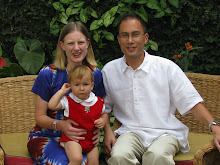
We have continued to host a slew of visitors, and for the past two days visiting us has been the pastor of the church in Seattle where I grew up (although she was not the pastor when I was there) and her husband, who is also a pastor at a Seattle church (where my Aunt Carol is a member). They decided to stop by Nairobi for a quick visit at the end of their time in Africa, after two and a half weeks on a sort of study tour of Rwanda through a Seattle-based organization. They are on a sabbatical/vacation and are spending quite a number of weeks visiting a number of countries in Africa and Europe.
Those two short days were really not enough time to see a lot of Kenya or even Nairobi alone. But one itinerary that gives visitors a good taste of some of the country’s history, culture and African wildlife in just a few hours, while allowing them to soak up some Kenyan sunshine and enjoy the warm air, is what I call the “Karen tour” – most of the sites are in the suburb of Karen, named after Karen Blixen, who wrote Out of Africa. We visited the elephant orphanage, where one can observe young elephants up close. Then we went to Blixen’s house, which you can tour. Then we had lunch in the garden on part of her old property. And then we went to the giraffe center, where you can stand face-to-face with these animals and feed them out of your hand.
On the morning of their second day here, I arranged a visit for all of us with the pastor of the Lutheran church (LCMS-affiliated) in Kibera, the enormous slum near us, that had been looted and burned during the post-election violence. This burned church and the pastor had made international news in January. Since our visitors’ time in Africa had been dealing a bit with peace and reconciliation issues in Rwanda, I thought a visit to this church would be along those same lines – a story of peace and reconciliation in Kenya. That pastor showed us around the church and its facilities that were burned, some of which are being rebuilt today, and told us about those tense days in late December and early January when the slum and other parts of the country had erupted in violence. He also took us for a walk a bit into the slum so we could see how people live there. Kibera is supposedly the biggest slum in the world, with about a million residents. Our visitors were moved by the powerful story and the scenes of destruction, so that was another side of Kenya that I’m glad they got to see, as tragic and negative as it is. Even I found it interesting, although I had visited this church once before during worship with our pastor and his wife.
We really enjoyed the visit with this couple. It was short but intense because of all the conversations we had, which ranged from talking about travel, past, present and future, to deeper conversations over work experience and being married. I did not know Kathy well, although she has turned over the pulpit to me many times when I have gone home and have preached at Our Redeemer’s. And I had never met Bruce before (his congregation’s secretary and her husband came with my Aunt Carol to visit us in Geneva at one point). So there was a lot to share about our lives, and since we have so many friends who are Lutheran – and Lutherans pastors – it was easy to relate to them. They took us out to dinner on the first night, and we went to a lovely restaurant in Karen. The food and conversation over a bottle of wine was excellent, and we enjoyed wonderful desserts afterwards.
Friday, June 6, 2008

Sunday, June 1, 2008
Visiting Kenya's second city, Mombasa
Late this past week, my parents returned home to the Seattle suburbs at the end of their five-week visit with us. For a few days before they left Nairobi, Sarah and I took advantage of Baba and Lolo’s (what the grandparents call themselves) willingness to babysit and took off without Lexi to visit another place on our East Africa list – the city of Mombasa. When people here say they are going to Mombasa, they mean the beaches and resorts that are outside the city proper. We had already been to one of these beach resorts back in December, and we actually prefer to visit cities as tourists as there are usually more museums, monuments and tourist attractions in them. So we had to return to see the city itself.
Part of deciding to go to Mombasa was to experience something else that was nearly as exciting (to Sarah, at least) as the destination – the train ride home. Because of the schedules of the train, we took it only one way and flew down to Mombasa on Sunday morning. More on the train trip below.
Mombasa isn’t the most pleasant place for a tourist. Many factors were not in our favor. We tried to see the city like we saw European cities – by staying at a hotel in the city center and walking around on foot a lot. Most tourists visiting Mombasa would probably have a guide to drive them around to the various sites. It’s the low tourist season anyway, hurt more by the fact that tourist numbers are still probably way below normal as a result of the post-election violence from earlier this year. So many guides and tourist operators are even more desperate for business and an income. So we as white people in a very densely populated town really stood out and showed we were tourists. We were hounded a lot by people wanting to be our guides, to give us taxi or tuk-tuk (motorcycle taxis) rides, or to come browse (and buy) in their souvenir shops or visit the tourist information/travel agent. And there are many more child beggars on the street than Nairobi who aren’t afraid to ask for a handout. So we could not really walk anywhere without being noticed and spoken to; so much for a quiet, pleasant getaway in another city. Also, it’s much hotter there than in Nairobi. One afternoon we just went back to our hotel and rested in the heat of the day. And there are lots of mosquitoes that ate me alive – they always love my blood. Add to all this the fact that Mombasa is a lot dirtier than Nairobi. There are large piles of garbage all over the place, and the streets and sidewalks have litter everywhere. Then the cats and crows scavenge in these garbage piles.
 But like a European city, Mombasa also has a historical old town, and we stayed very close to it. We toured it with a guide on our last afternoon there. The houses have balconies over the street (think New Orleans-style but with intricately carved wooden railings instead of iron), and the lanes among them are windy and narrow. The architecture here is influenced by the Portuguese and Indians, and the city, which was really just the old town, an island on the coast, for centuries, changed hands many times among the Portuguese and Arabs. There are some streets in the old town that are mostly intact and where most historical houses/facades are in fairly good condition. But wander off the main drags, and you’ll encounter much poorer living conditions with many run-down houses and with all the piles of garbage among them.
On the edge of the old town is Mombasa’s main attraction, Fort Jesus, built as a defense by the Portuguese. We toured that as well. It’s got a few interesting places to walk around among the outer walls and ruined buildings inside, and it has a museum inside.
One night we had a lovely dinner at a fancy restaurant on the water. We returned to a dark city center and a dark hotel room, where we were issued a couple of candles for the night. It appeared the entire city was without electricity – the case for most of the country, we later learned.
We paid a brief visit to a large Hindu temple near the train station. It had been advertised as being tourist-friendly – that you could get a tour. We were met by a kind Indian gentlemen who met us at the front door. He showed us the prayer rooms and explained briefly how and to what Hindus pray, mentioning their belief in reincarnation. Sarah asked him how long he had been in Kenya. He told us he was born in Kenya and that his father had been born here too. I thought it was a strange answer for someone who believes in reincarnation. I was surprised he didn’t respond with something like, “I started my life as a peasant in 1362 in Nepal then became someone in the royal court in India after that…”
Shortly after we moved here, I had heard about taking the train to get to/from Mombasa. This route’s operation has recently been taken over by the South African railways, and apparently they had brought back some of the old-time feeling of a railway journey. So we had to try it ourselves. Going either way, it’s an overnight trip that takes at least 13 hours – leaving one city at 7:00 and getting in sometime the next morning. This isn’t Switzerland anymore, Toto, and trains (or anything, for that matter) cannot be expected to run on schedule. They tell people to expect to arrive more around 11:00. We had to check in for our trip an hour early, although there were only a handful of other parties in the one sleeper car that was used on the whole train. It was dark by the time we left Mombasa, so we were not going to be able to see anything. At 8:00 we were invited for dinner in the dining car. This was part of the trip that we had heard was fairly luxurious, and it was a fine and lovely meal. We started with bread and soup and had our choice of three main courses (one of them vegetarian). We chose the beef/vegetable stew over rice. And there was fruit salad for dessert. The silverware used was mostly the old, fancy silver used during colonial times, but the dishes were fairly modern. By the time dinner was over, it was fairly late, so we retired to our cabin, which was fairly spacious compared to its European train counterparts, and went to bed. I slept quite well. A hot breakfast was served at 7:00 a.m. the next morning in the dining car again. We sat and read after breakfast while we finished the journey. We got into Nairobi around 10:45 a.m. Before we entered the city, we saw a bit of wildlife in some fields – some zebra and some animals in the antelope family. All this – transportation on an overnight train trip, a two-person private cabin with bedding, and dinner and breakfast – was quite cheap. The only drawbacks were that the bathrooms were lacking in several ways – squat toilets, no soap, and no locks on most of them. We had a small sink in our cabin, and there was a separate faucet for drinking water, but it didn’t work. But it was fun to come home this way – a fun part of the trip and not just functional transportation to get us home.
Part of deciding to go to Mombasa was to experience something else that was nearly as exciting (to Sarah, at least) as the destination – the train ride home. Because of the schedules of the train, we took it only one way and flew down to Mombasa on Sunday morning. More on the train trip below.
Mombasa isn’t the most pleasant place for a tourist. Many factors were not in our favor. We tried to see the city like we saw European cities – by staying at a hotel in the city center and walking around on foot a lot. Most tourists visiting Mombasa would probably have a guide to drive them around to the various sites. It’s the low tourist season anyway, hurt more by the fact that tourist numbers are still probably way below normal as a result of the post-election violence from earlier this year. So many guides and tourist operators are even more desperate for business and an income. So we as white people in a very densely populated town really stood out and showed we were tourists. We were hounded a lot by people wanting to be our guides, to give us taxi or tuk-tuk (motorcycle taxis) rides, or to come browse (and buy) in their souvenir shops or visit the tourist information/travel agent. And there are many more child beggars on the street than Nairobi who aren’t afraid to ask for a handout. So we could not really walk anywhere without being noticed and spoken to; so much for a quiet, pleasant getaway in another city. Also, it’s much hotter there than in Nairobi. One afternoon we just went back to our hotel and rested in the heat of the day. And there are lots of mosquitoes that ate me alive – they always love my blood. Add to all this the fact that Mombasa is a lot dirtier than Nairobi. There are large piles of garbage all over the place, and the streets and sidewalks have litter everywhere. Then the cats and crows scavenge in these garbage piles.
 But like a European city, Mombasa also has a historical old town, and we stayed very close to it. We toured it with a guide on our last afternoon there. The houses have balconies over the street (think New Orleans-style but with intricately carved wooden railings instead of iron), and the lanes among them are windy and narrow. The architecture here is influenced by the Portuguese and Indians, and the city, which was really just the old town, an island on the coast, for centuries, changed hands many times among the Portuguese and Arabs. There are some streets in the old town that are mostly intact and where most historical houses/facades are in fairly good condition. But wander off the main drags, and you’ll encounter much poorer living conditions with many run-down houses and with all the piles of garbage among them.
On the edge of the old town is Mombasa’s main attraction, Fort Jesus, built as a defense by the Portuguese. We toured that as well. It’s got a few interesting places to walk around among the outer walls and ruined buildings inside, and it has a museum inside.
One night we had a lovely dinner at a fancy restaurant on the water. We returned to a dark city center and a dark hotel room, where we were issued a couple of candles for the night. It appeared the entire city was without electricity – the case for most of the country, we later learned.
We paid a brief visit to a large Hindu temple near the train station. It had been advertised as being tourist-friendly – that you could get a tour. We were met by a kind Indian gentlemen who met us at the front door. He showed us the prayer rooms and explained briefly how and to what Hindus pray, mentioning their belief in reincarnation. Sarah asked him how long he had been in Kenya. He told us he was born in Kenya and that his father had been born here too. I thought it was a strange answer for someone who believes in reincarnation. I was surprised he didn’t respond with something like, “I started my life as a peasant in 1362 in Nepal then became someone in the royal court in India after that…”
Shortly after we moved here, I had heard about taking the train to get to/from Mombasa. This route’s operation has recently been taken over by the South African railways, and apparently they had brought back some of the old-time feeling of a railway journey. So we had to try it ourselves. Going either way, it’s an overnight trip that takes at least 13 hours – leaving one city at 7:00 and getting in sometime the next morning. This isn’t Switzerland anymore, Toto, and trains (or anything, for that matter) cannot be expected to run on schedule. They tell people to expect to arrive more around 11:00. We had to check in for our trip an hour early, although there were only a handful of other parties in the one sleeper car that was used on the whole train. It was dark by the time we left Mombasa, so we were not going to be able to see anything. At 8:00 we were invited for dinner in the dining car. This was part of the trip that we had heard was fairly luxurious, and it was a fine and lovely meal. We started with bread and soup and had our choice of three main courses (one of them vegetarian). We chose the beef/vegetable stew over rice. And there was fruit salad for dessert. The silverware used was mostly the old, fancy silver used during colonial times, but the dishes were fairly modern. By the time dinner was over, it was fairly late, so we retired to our cabin, which was fairly spacious compared to its European train counterparts, and went to bed. I slept quite well. A hot breakfast was served at 7:00 a.m. the next morning in the dining car again. We sat and read after breakfast while we finished the journey. We got into Nairobi around 10:45 a.m. Before we entered the city, we saw a bit of wildlife in some fields – some zebra and some animals in the antelope family. All this – transportation on an overnight train trip, a two-person private cabin with bedding, and dinner and breakfast – was quite cheap. The only drawbacks were that the bathrooms were lacking in several ways – squat toilets, no soap, and no locks on most of them. We had a small sink in our cabin, and there was a separate faucet for drinking water, but it didn’t work. But it was fun to come home this way – a fun part of the trip and not just functional transportation to get us home.
Sunday, May 18, 2008
The Flame Trees of Thika
Saturday we drove northeast from Nairobi to Thika. You might be familar with the book with that town in its name. The traffic was bad getting out of and into the city, but the drive was nice. The countryside is really beautiful. We had a little trouble finding the place we were looking for in Thika. It was a hotel that has been there since 1908 - used by the white settlers as a way station. It's situated on a piece of land between two waterfalls. Lexi liked to look at them - the rest of us did, too.
Then we drove another 20 kilometers to 14 Falls which is a santuary type place. There is a horseshoe shaped falls broken up into 14 sections hence the name. There were several school groups there and the thing to do seemed to be to wade across the water a ways from the top of the falls to the other side. We decided just to look from the shore. People had brought their picnic lunches as well.
Overall, a very nice outing.
Then we drove another 20 kilometers to 14 Falls which is a santuary type place. There is a horseshoe shaped falls broken up into 14 sections hence the name. There were several school groups there and the thing to do seemed to be to wade across the water a ways from the top of the falls to the other side. We decided just to look from the shore. People had brought their picnic lunches as well.
Overall, a very nice outing.
Wednesday, May 14, 2008
Welcome to Africa column: Casting light on the situation
My parents are visiting us in Nairobi from the suburbs of Seattle for several weeks. The other day, we stopped at a cafe near our house. My mother used the bathroom and noticed a small sign above the light switch that read: This is the light switch.
Huh?
Huh?
Thursday, May 1, 2008
Tanzania
We got up early this morning and piled in the car to head to Tanzania. We are spending 4 days in Arusha which is about a 5 hour drive from Nairobi. You have to cross the border (of course) - and that takes a good hour! You have to register your car in two places on either side plus stop twice for immigration - once on the Kenyan side and the other on the Tanzanian. It's quite a struggle. You don't know quite where to go if it is your first time, but plenty of helpful people point you on your way. I am not sure if they were employees or just people hanging around.
Driving south the scenery is much different than driving north. Tanzania seems to be quite fertile and there are some interesting rock formations along the way...
Time for dinner now. More later.
Driving south the scenery is much different than driving north. Tanzania seems to be quite fertile and there are some interesting rock formations along the way...
Time for dinner now. More later.
Monday, April 14, 2008
That magnificent bird

I hope somebody is impressed by this. We tried to be.
When my sister was visiting from Seattle last month, we went to Murchison Falls National Park in northwestern Uganda for the long Easter weekend. The Victoria Nile River flows through the park (this part of the river originates in Lake Victoria), and at one point along the river, it shoots through a narrow gorge in the world’s most powerful waterfall. Hence the name of the park – Murchison Falls.

The calmer parts of the river are teeming with wildlife – elephants, hippos, crocodile and many types of water birds, from the tiny to the big. One bird we saw was the elusive shoebill stork (this is the impressive part). Apparently sightings of this bird are rare. Even our Lonely Planet guidebook says you have to be “very lucky” to see this bird when visiting the park. It was a big, gray bird with a funny-looking beak. On Easter morning at sunrise, we took a cruise on the river downstream to the delta, where the Victoria Nile dumps into Lake Albert. We don’t know how they spotted it, but our guides found this bird several yards back from the bank of the river, and, since it was gray and very neutral-colored, it was even harder to spot among the river reeds. This is why my photos of it did not come out very clear, but trust me – this is an impressive sight. Hopefully there are some bird watchers among you who will be impressed.
Another impressive fact we learned is that it takes a whole three months for water to get from the source of the Nile to its mouth in the Mediterranean. So the course the river takes is: from Lake Victoria into the Victoria Nile River, which dumps into Lake Albert, which flows into the Albert Nile River, which eventually dumps into the Nile, which we all associate with Egypt. And all along the delta that we visited on Easter morning, there was a lot of papyrus, which is what Moses was hidden among when his mother sent him away along the Nile in Egypt. In places like this that we visited, it seems time has stood still since those ancient days, and that it is still as wild and primitive as it was back then, with animals still roaming free and nature ruling the land.
Saturday, April 12, 2008
Want to buy a kite?
Want to buy a kite? Or how about a goldfish - complete with bowl? Car floor mats? Sunglasses? The Economist? A TV antenna?
All these and more can be yours - from the front seat of your car!
Driving in downtown Nairobi, it is very common to see hawkers walking down the middle of the street, trying to sell items to people as they sit in their cars waiting for the red light to change or the traffic to move on. And, yes, we have seen all of the above being sold. Though we aren't sure who buys the things. You are on the way to church and you just happen to think 'yes, I do need to buy a new shower curtain - and I can get one at this stop light!' We certainly haven't purchased anything this way and except for newspapers, I don't think I have seen anyone buying any other items from their car windows, either.
All these and more can be yours - from the front seat of your car!
Driving in downtown Nairobi, it is very common to see hawkers walking down the middle of the street, trying to sell items to people as they sit in their cars waiting for the red light to change or the traffic to move on. And, yes, we have seen all of the above being sold. Though we aren't sure who buys the things. You are on the way to church and you just happen to think 'yes, I do need to buy a new shower curtain - and I can get one at this stop light!' We certainly haven't purchased anything this way and except for newspapers, I don't think I have seen anyone buying any other items from their car windows, either.
Subscribe to:
Posts (Atom)